Micro Class - 2026
Project SG32C
High-lift payload aircraft optimized for short takeoff performance
The SG32C, officially named Sneaky Golem 3.2 Cycle, is uOttawa Aeronautics’ 2026 SAE Aero Design Micro Class aircraft, developed for maximum payload performance under strict scoring constraints. As the final iteration under the current competition rules, the aircraft is designed to fully capitalize on the scoring equation through aggressive weight reduction, high lift generation, and short takeoff capability.
Built around a lightweight twin-boom configuration, the platform prioritizes payload capacity and takeoff efficiency. The design reflects a highly optimized balance between aerodynamic performance, structural simplicity, and manufacturability, with every design decision driven by maximizing flight score.

Project Overview
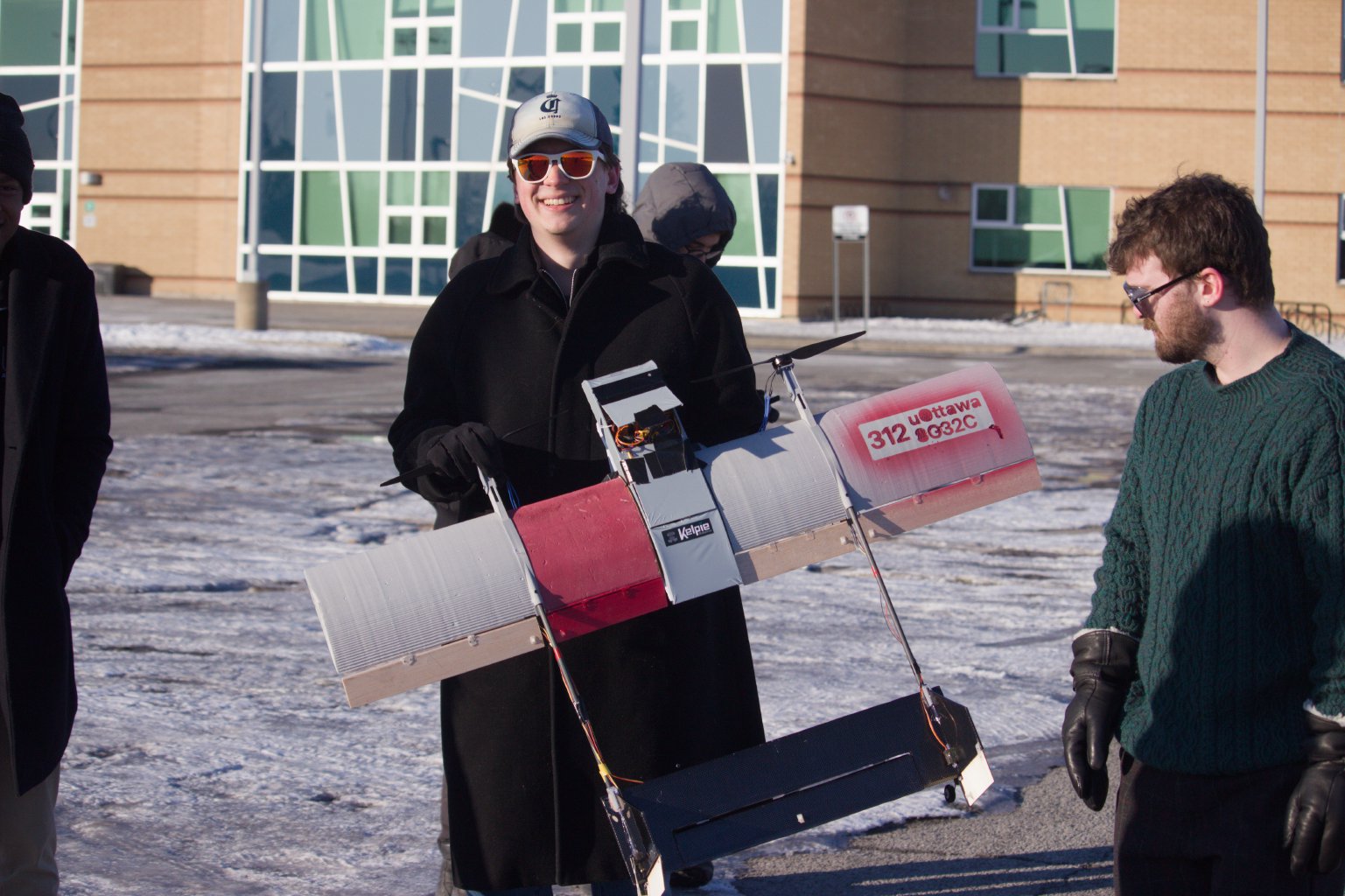
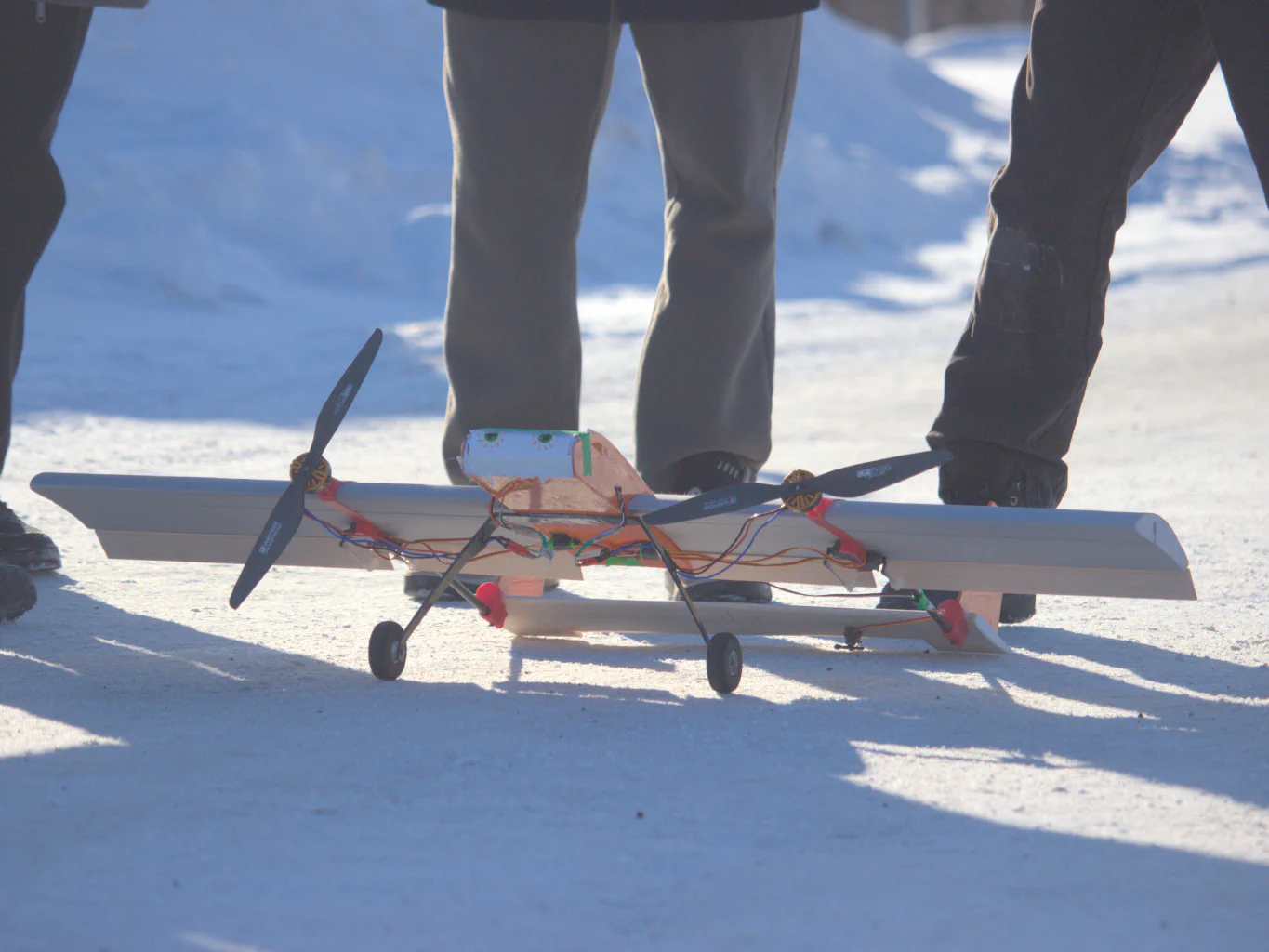 The aircraft resting in the snow before a testflight
The SG32C was designed with a single objective: maximize competition score. Unlike typical designs that prioritize minimal wingspan or use a delta configuration, this aircraft is intentionally optimized for payload capacity and takeoff performance.
Through analysis of previous competition results and scoring trends, the team prioritized carrying a large payload and achieving short takeoff distances. This approach led to a design that accepts certain trade-offs, such as increased wingspan penalties, in exchange for significantly higher payload-based scoring.
The result is a highly specialized aircraft built to push the limits of Micro Class performance.
Key Focus Areas:
- Maximizing payload capacity
- Minimizing empty weight
- Achieving short takeoff distance
Payload System
Payload capacity is the primary scoring driver. The aircraft is designed to carry a large internal payload, with container geometry optimized for weight distribution and manufacturability.
A half-moon container shape was selected to simplify center-of-gravity alignment and ensure consistent performance .
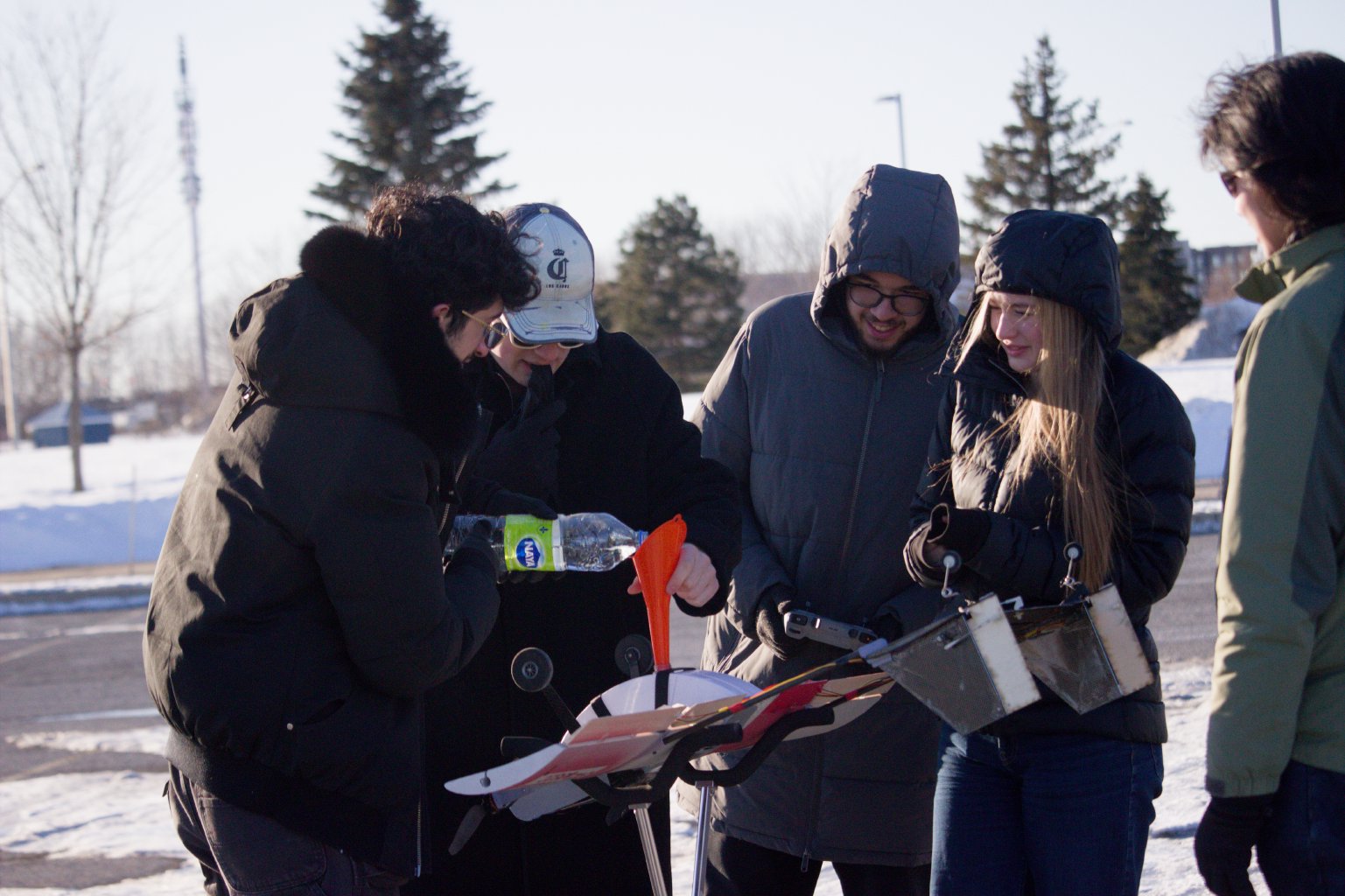
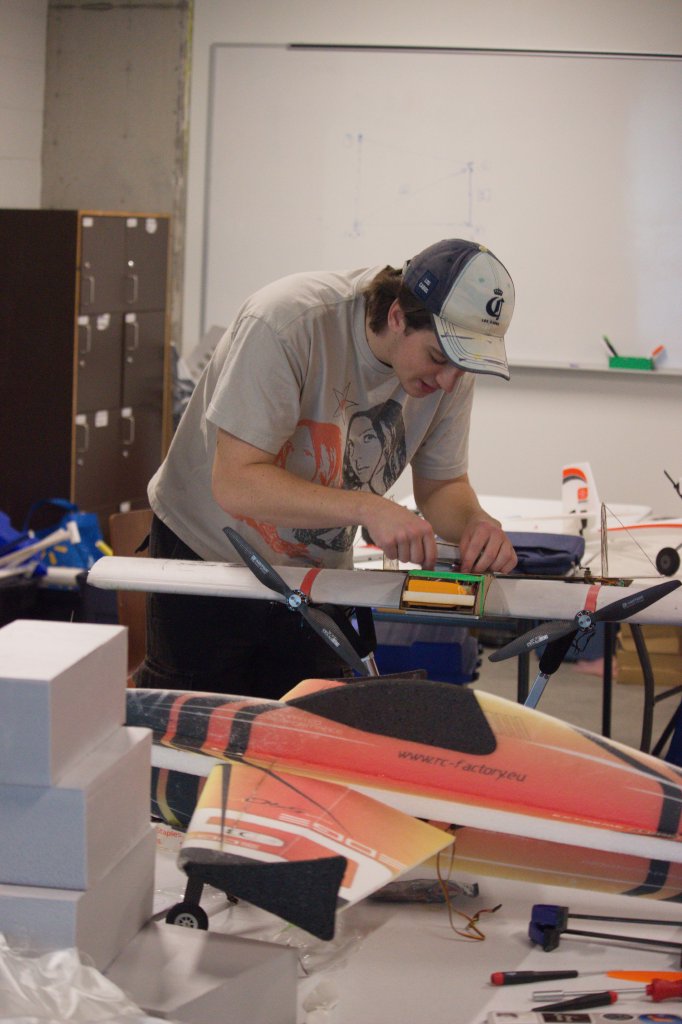
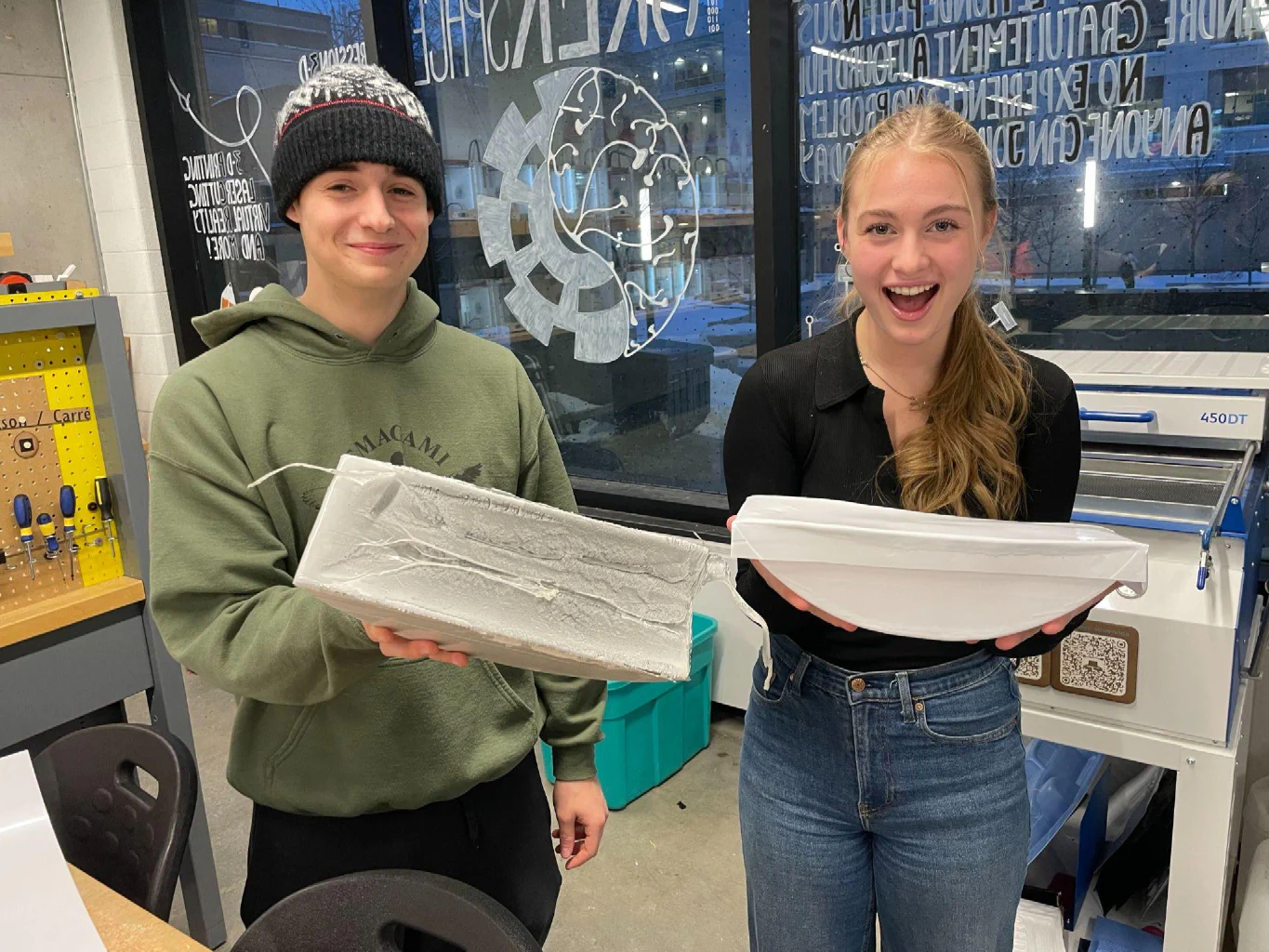 Fabricating the water tank in the makerspace
Aircraft Configuration
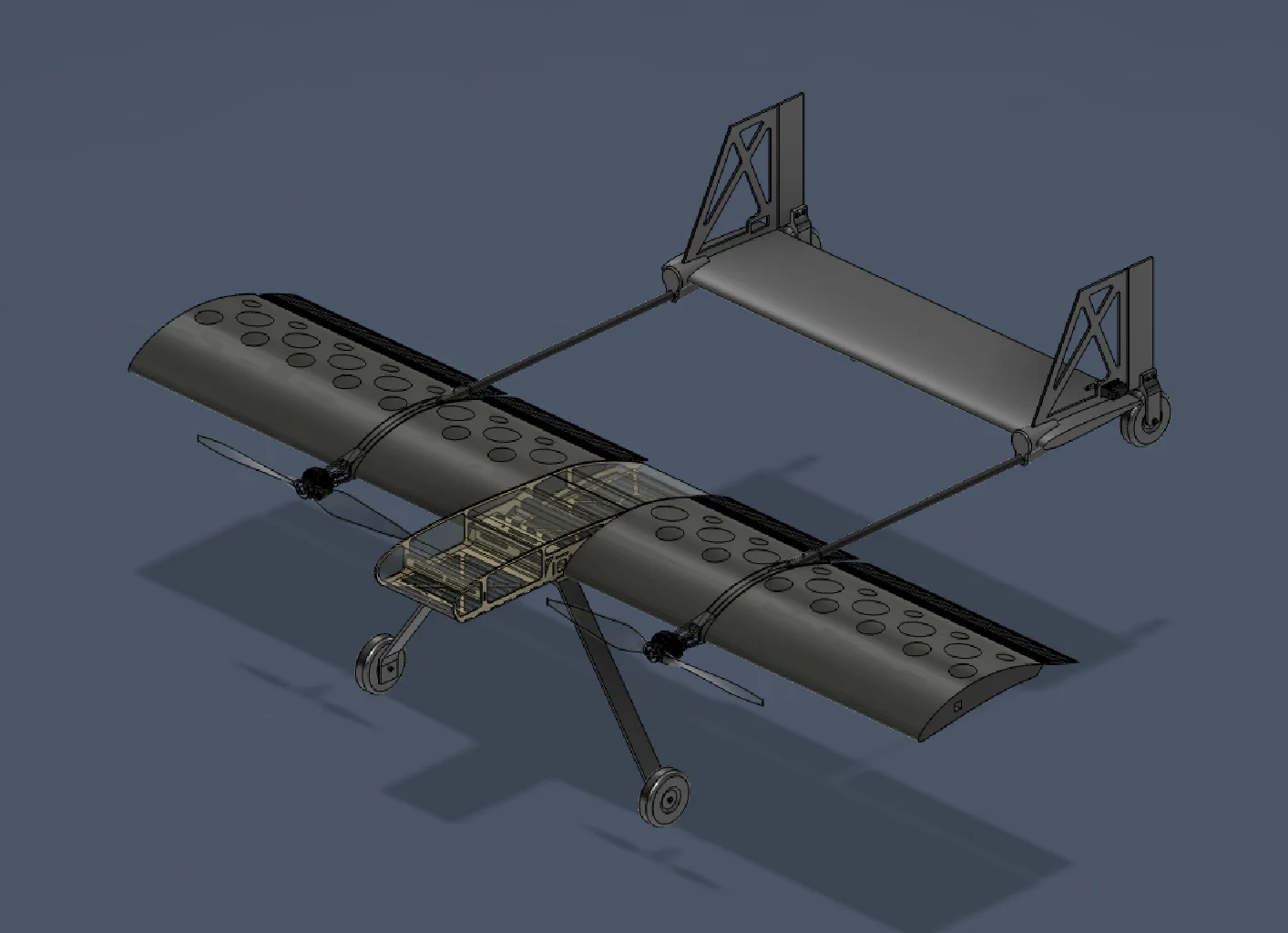 a CAD render of SG32C looking head on
Overall Configuration
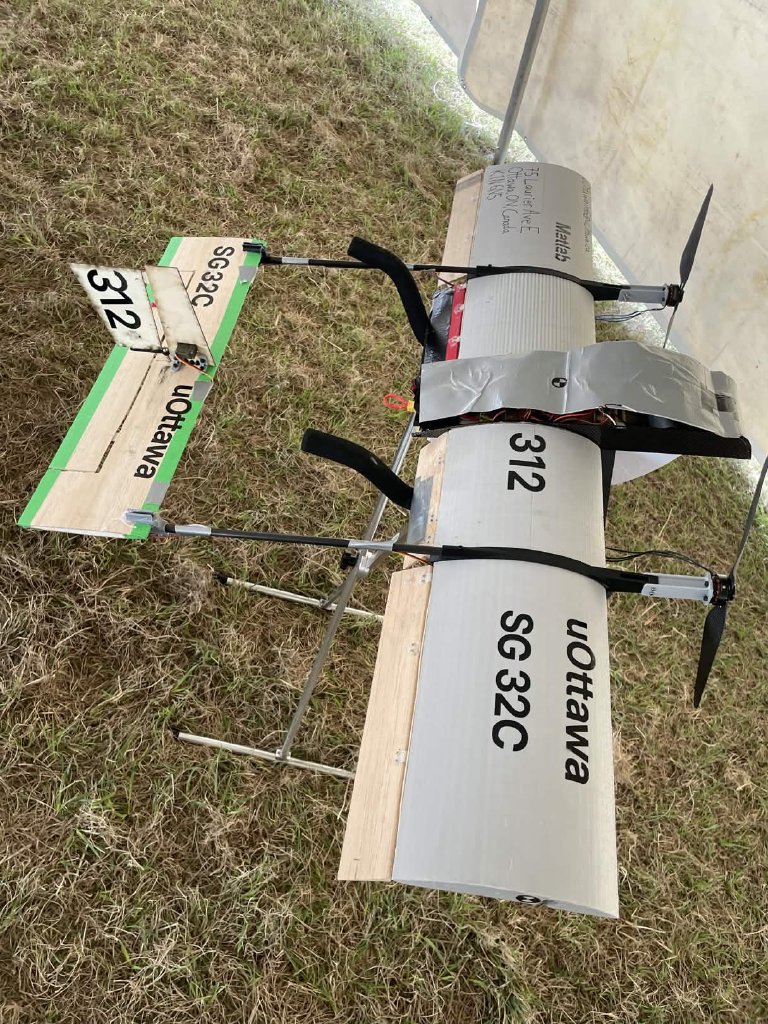
The SG32C features a high-wing, twin-boom taildragger configuration optimized for stability, payload integration, and takeoff performance. This layout provides strong inherent stability while allowing efficient structural integration of the payload system and propulsion components .
The twin-boom configuration simplifies empennage alignment and improves repeatability during assembly and testing.
Wing Design
The wing is the primary performance driver of the aircraft, designed to generate high lift at low speeds. A CH10 airfoil was selected through a trade study comparing lift-to-drag ratio, maximum lift coefficient, stall angle, and manufacturability.
Aspect ratio and planform were optimized to improve lift efficiency while reducing structural mass. Flaps and propeller wash further enhance lift generation during takeoff.
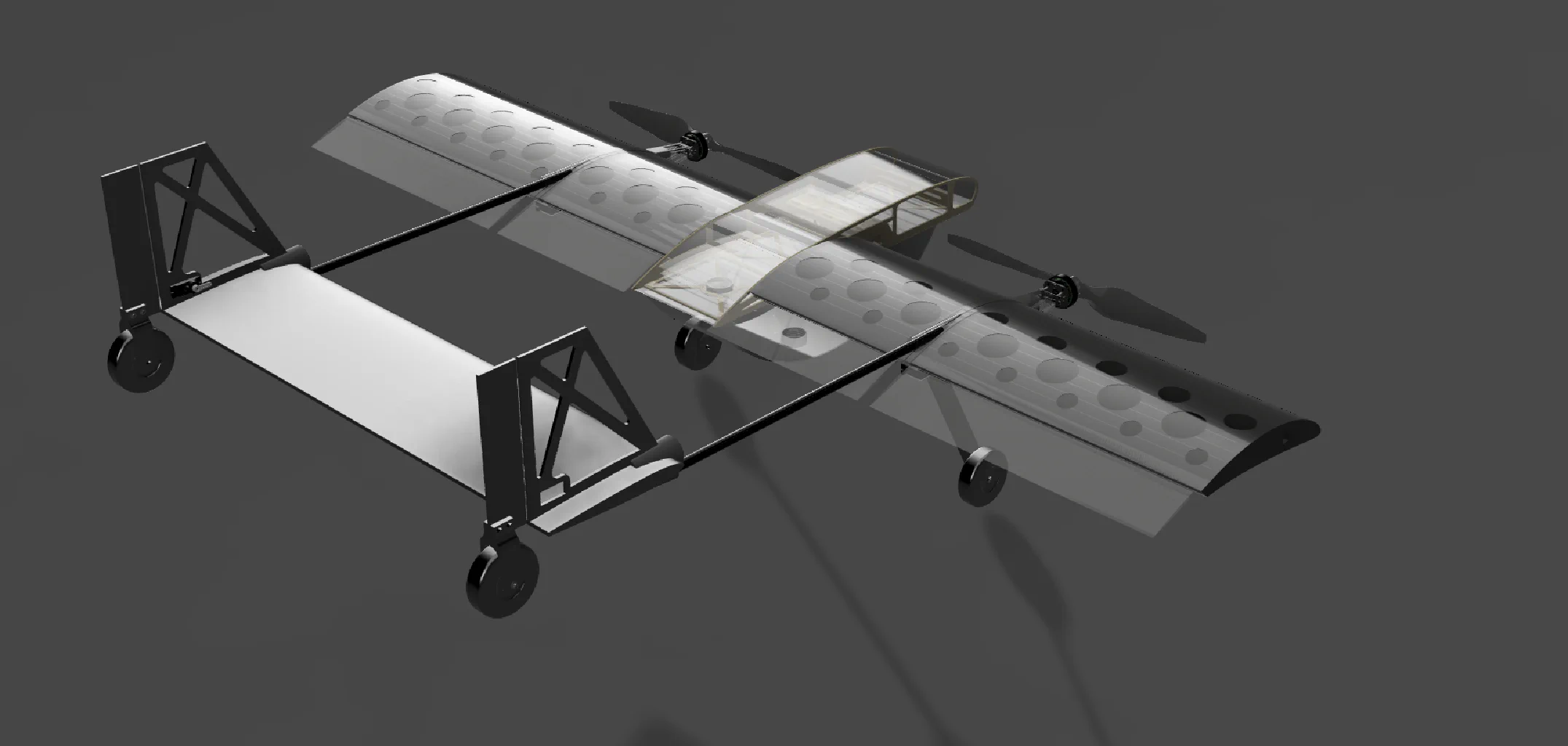 a CAD render of SG32C looking from behind and to the side
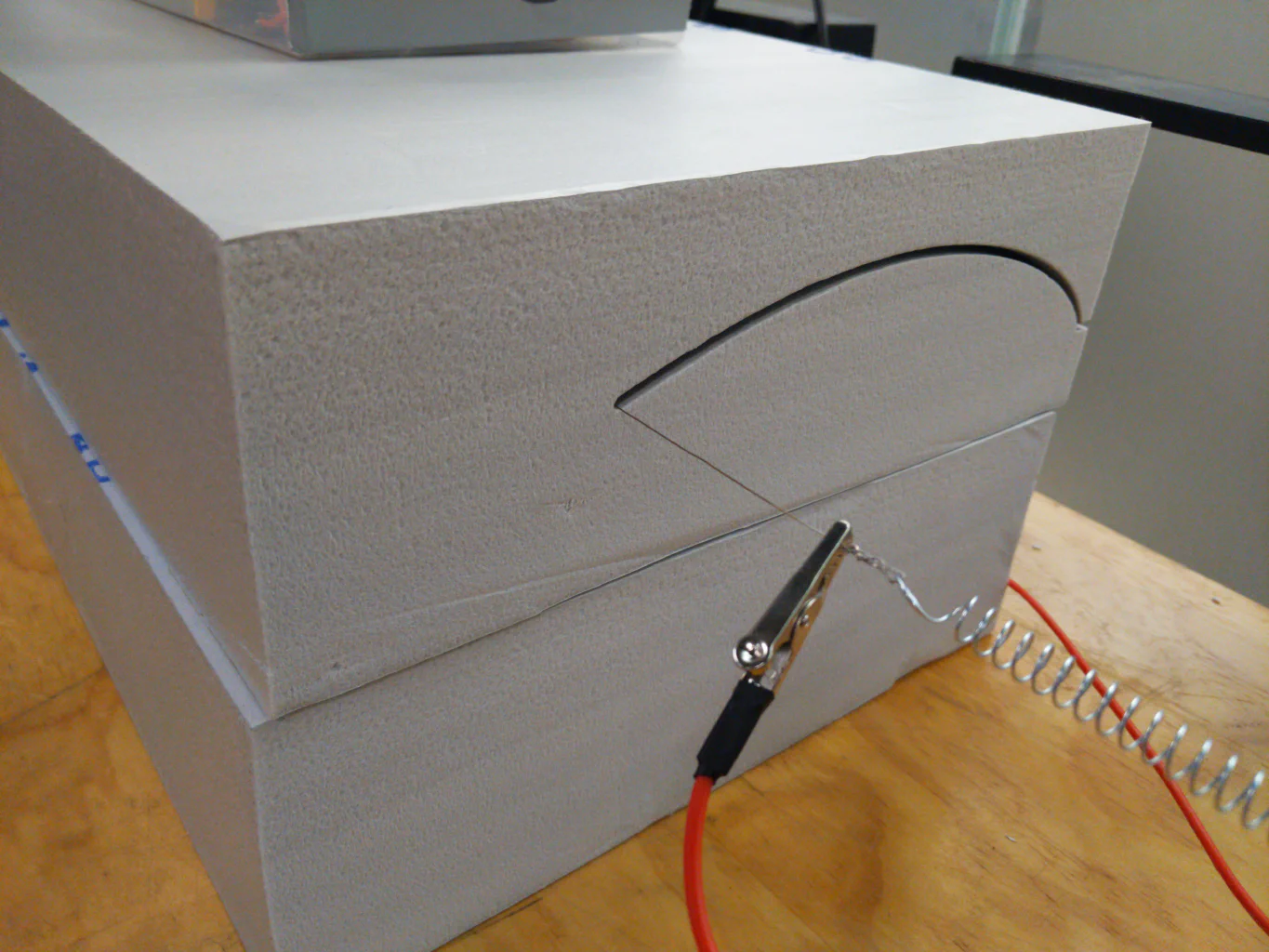 Fabricating the wing using a CNC hot wire cutter
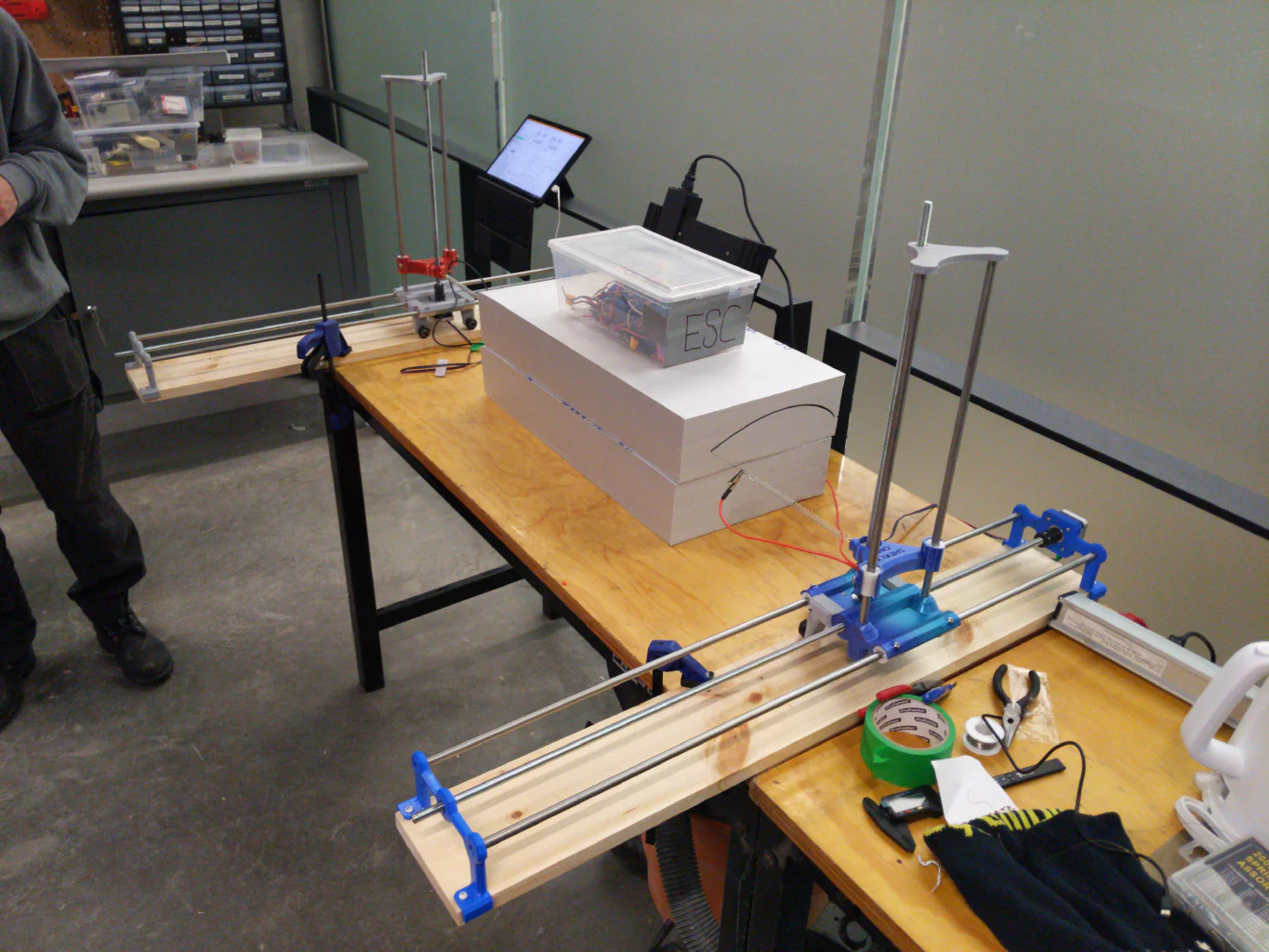 Our custom-built CNC hot wire cutter
Structure and Manufacturing
The aircraft structure is optimized for extreme weight efficiency. Foam, carbon fiber, and 3D printed components are combined to achieve a lightweight yet structurally capable airframe.
Hot-wire cutting was used to manufacture the wings and tail, with a custom-built 4-axis CNC system improving accuracy and repeatability .
This approach enabled rapid iteration and consistent part quality throughout development.
Propulsion and Performance
Propulsion was selected to maximize thrust for short takeoff performance. Multiple motor-propeller combinations were tested, with final selection based on thrust-to-weight efficiency.
The aircraft also leverages propeller wash to generate additional lift during takeoff. Tuft testing confirmed that propeller-induced airflow contributes to lift generation even at low speeds.
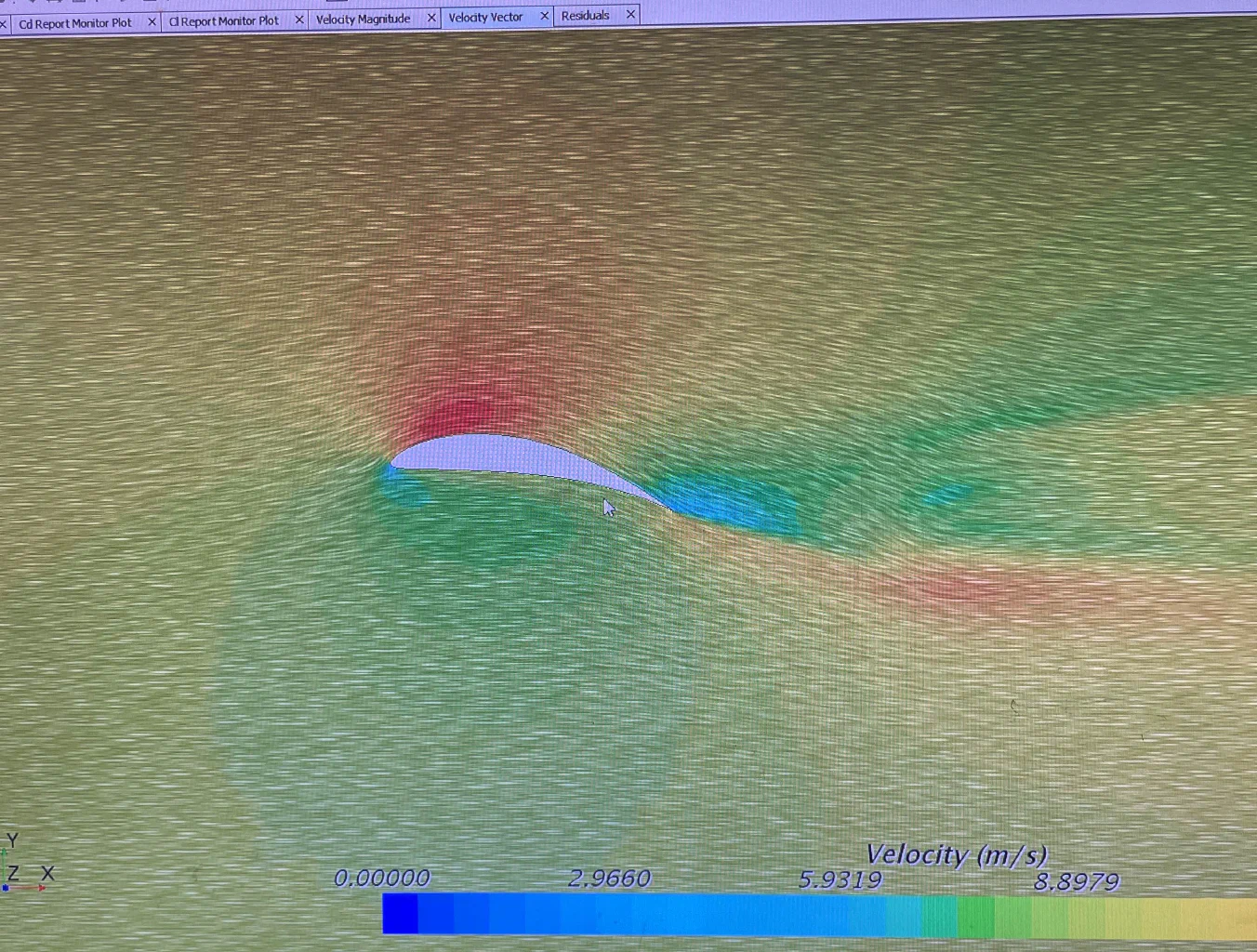 A simulation of the air going over the wing of SG32C
Design Philosophy
Designed for Maximum Score
Every design decision was driven by the competition scoring equation.
Extreme Weight Reduction
The aircraft minimizes empty mass to maximize payload performance.
Rapid Iteration
Manufacturing methods enabled fast iteration and continuous improvement.
Performance and Testing
The SG32C underwent extensive ground and flight testing to validate aerodynamic performance, structural integrity, and subsystem integration.
Testing confirmed the aircraft’s ability to take off under full payload conditions using propeller wash and aerodynamic lift, with real-world performance exceeding initial estimates.
See our blog post for what that looks like.
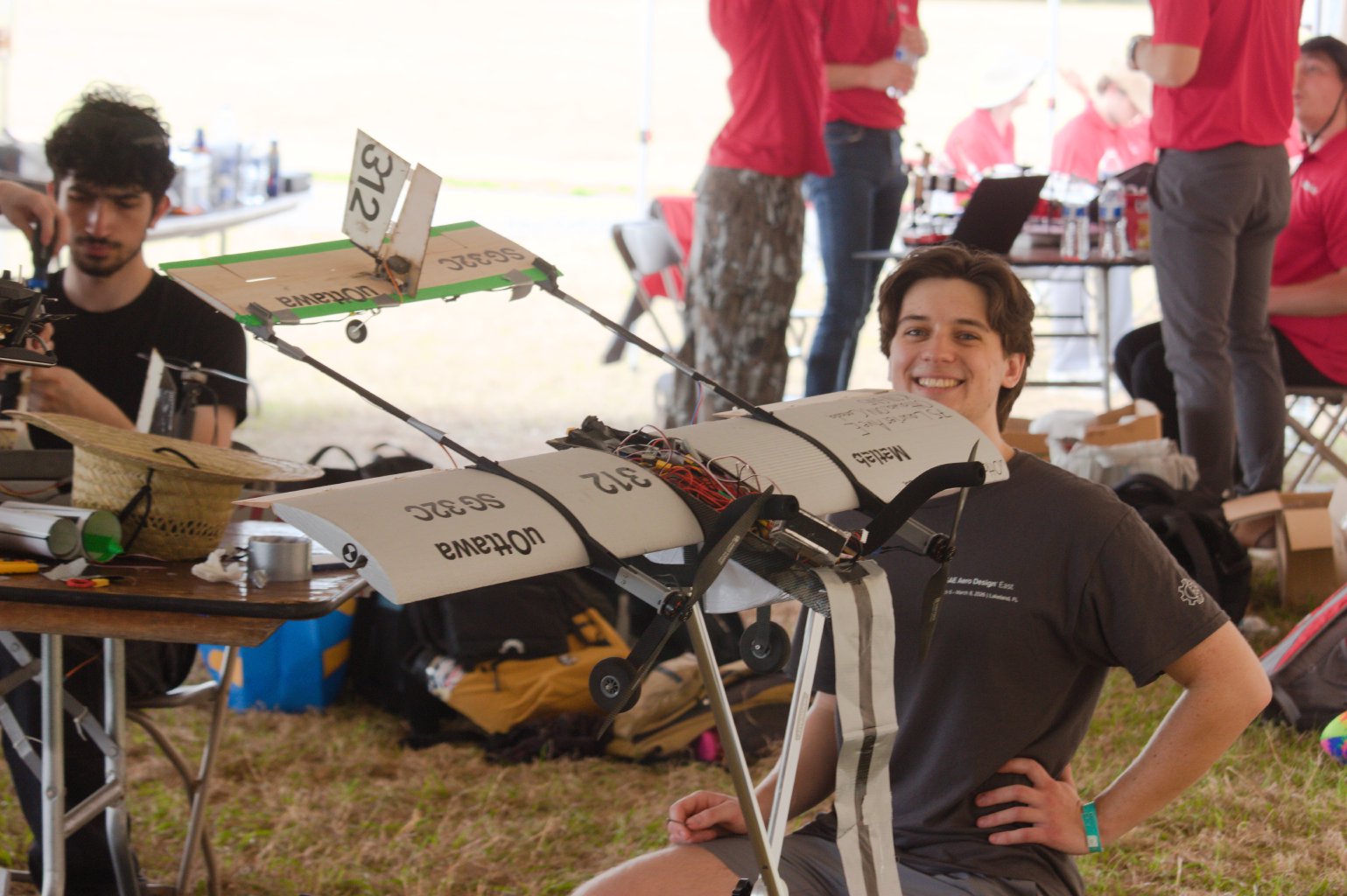
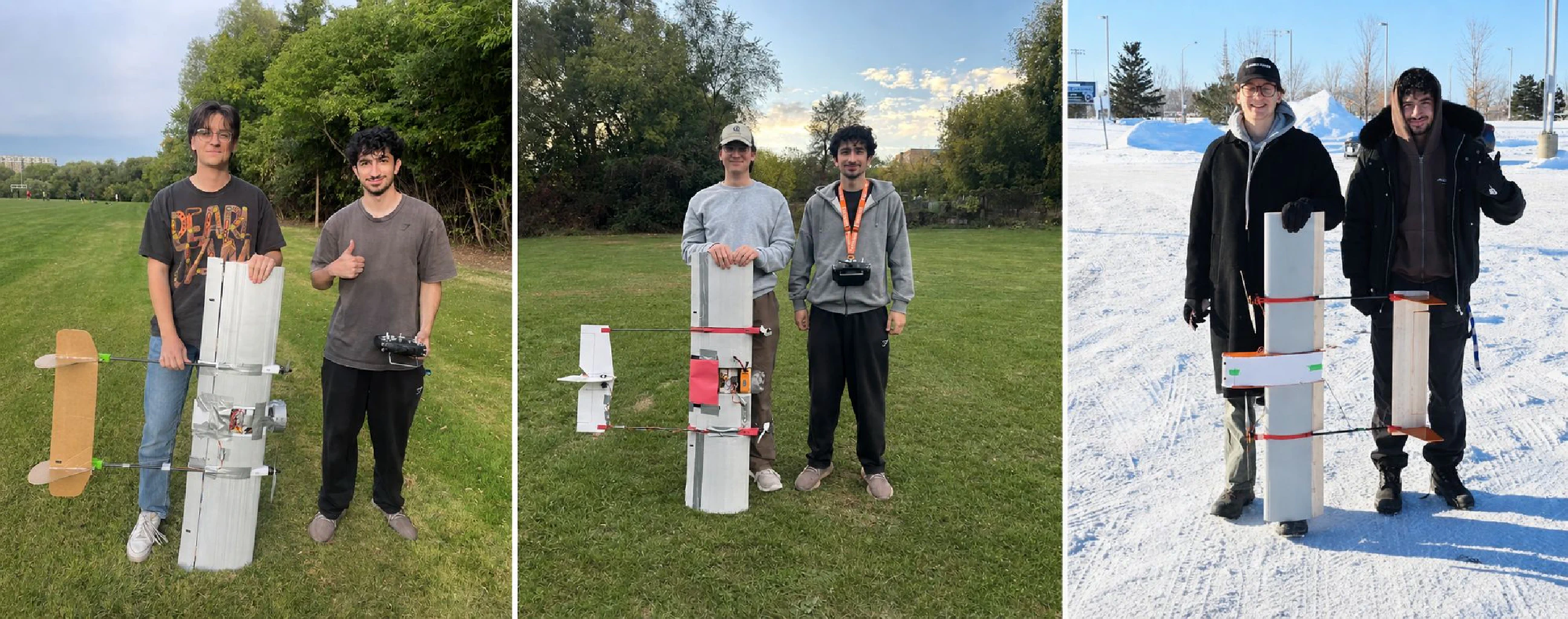 Three iterations of SG32C
Competition performance
The SG32C delivered the strongest Micro Class performance in team history at the SAE Aero Design East competition.
The aircraft placed 6th Overall and 3rd in Technical Presentation, marking a major milestone for the team. These results reflect both the effectiveness of the design strategy and the continued growth of the team’s engineering and communication capabilities.
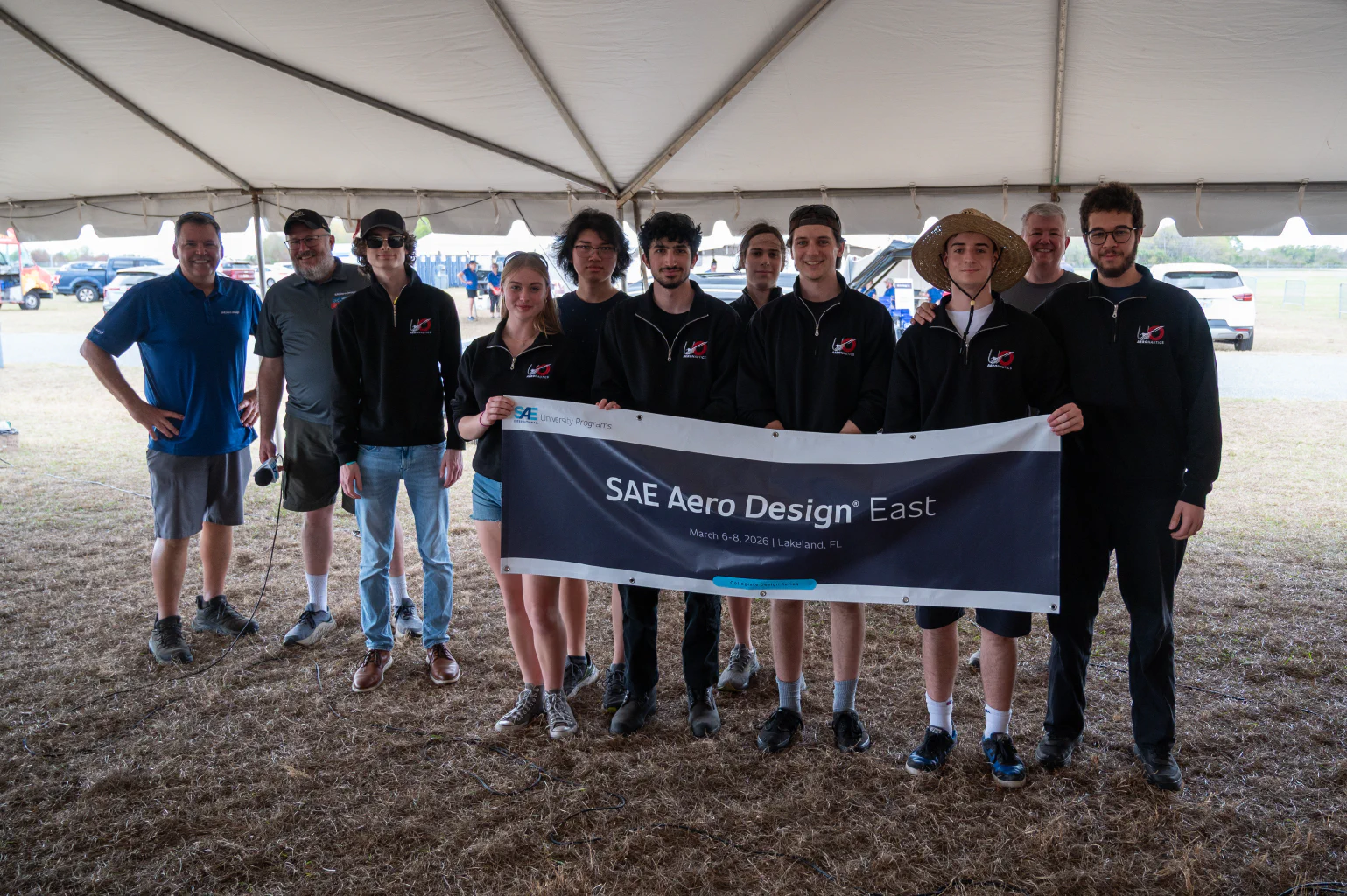 Holding the SAE Aero Banner at the competition awards ceremony
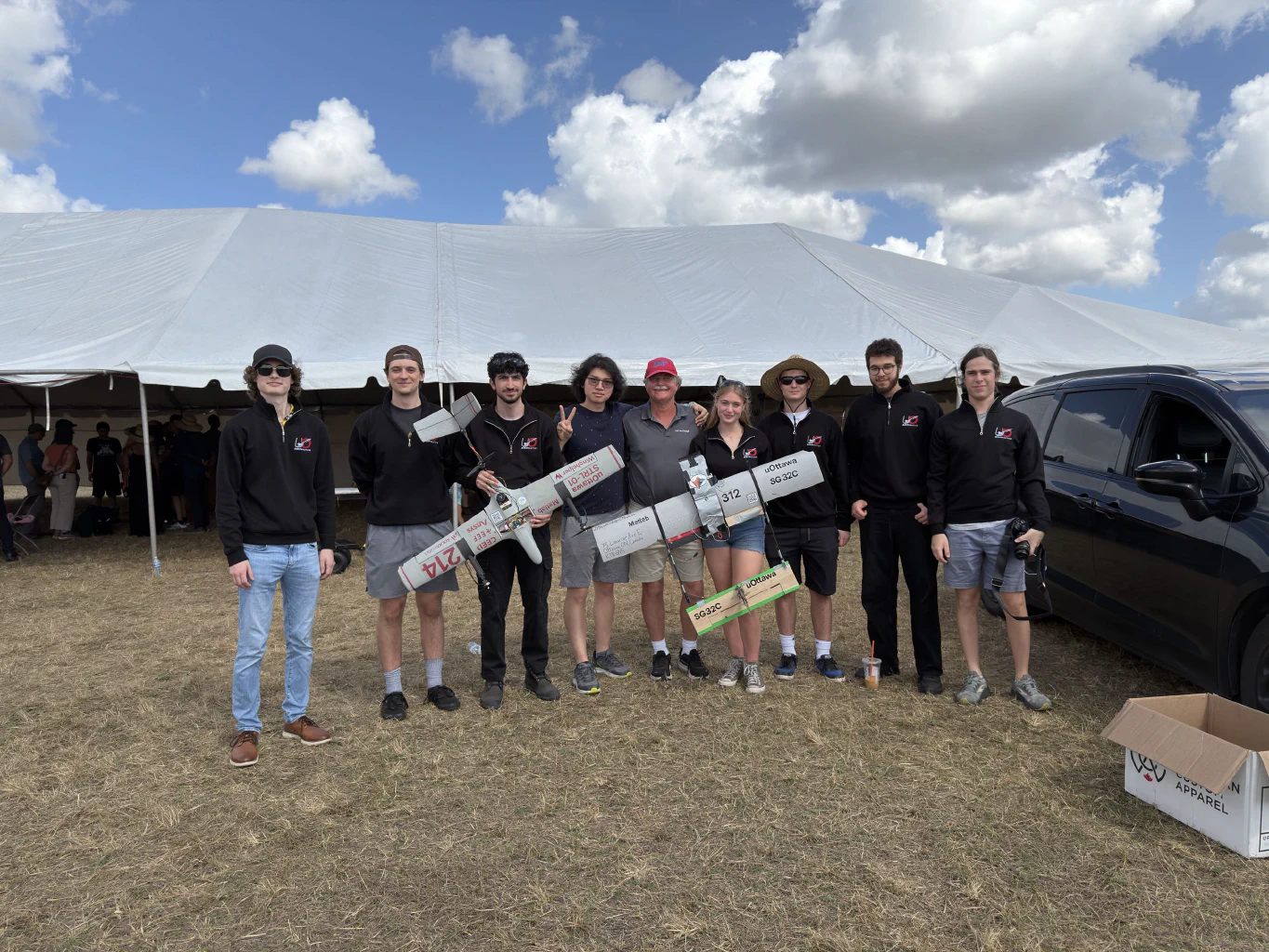 A team photo with Glen
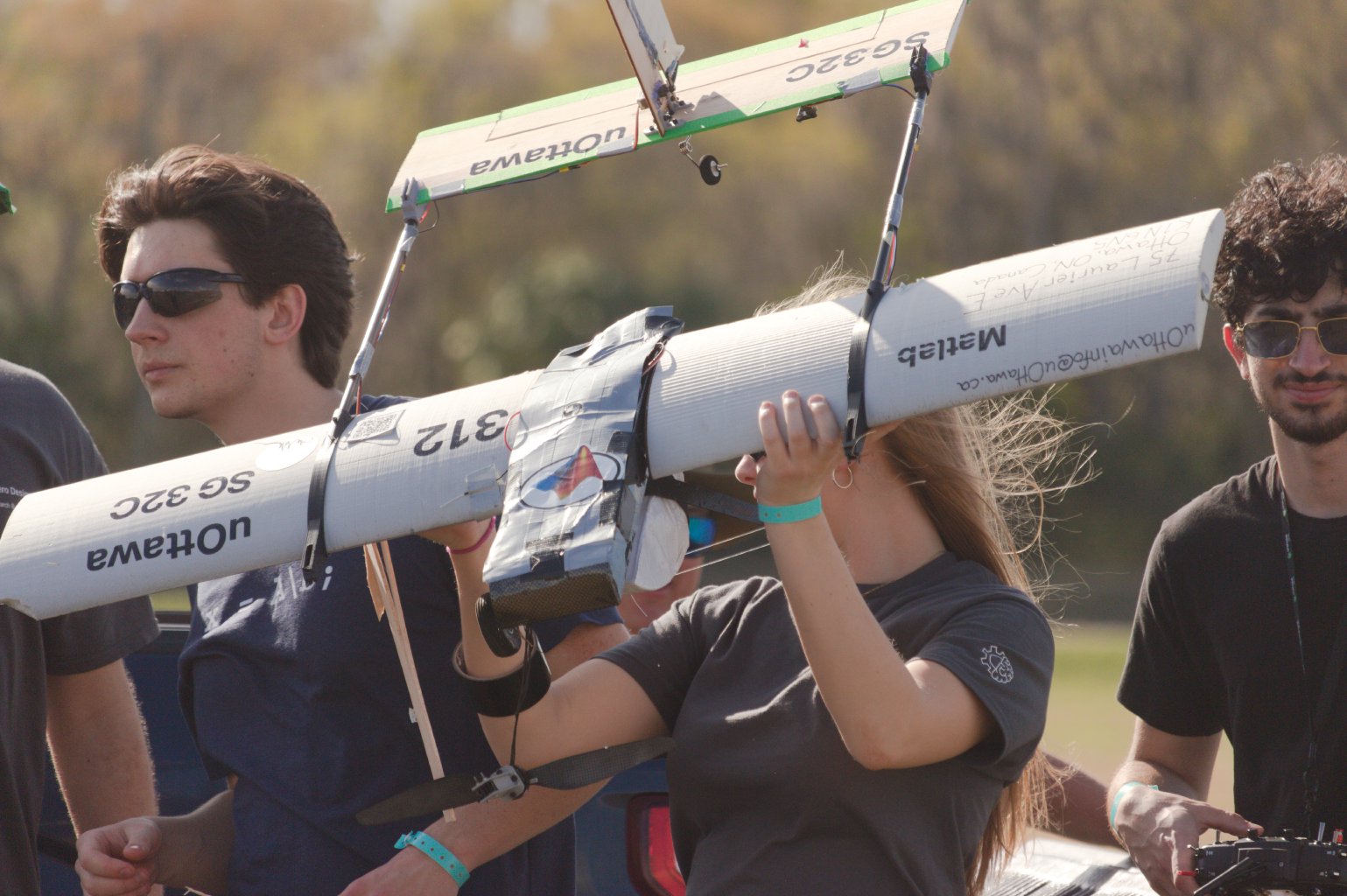
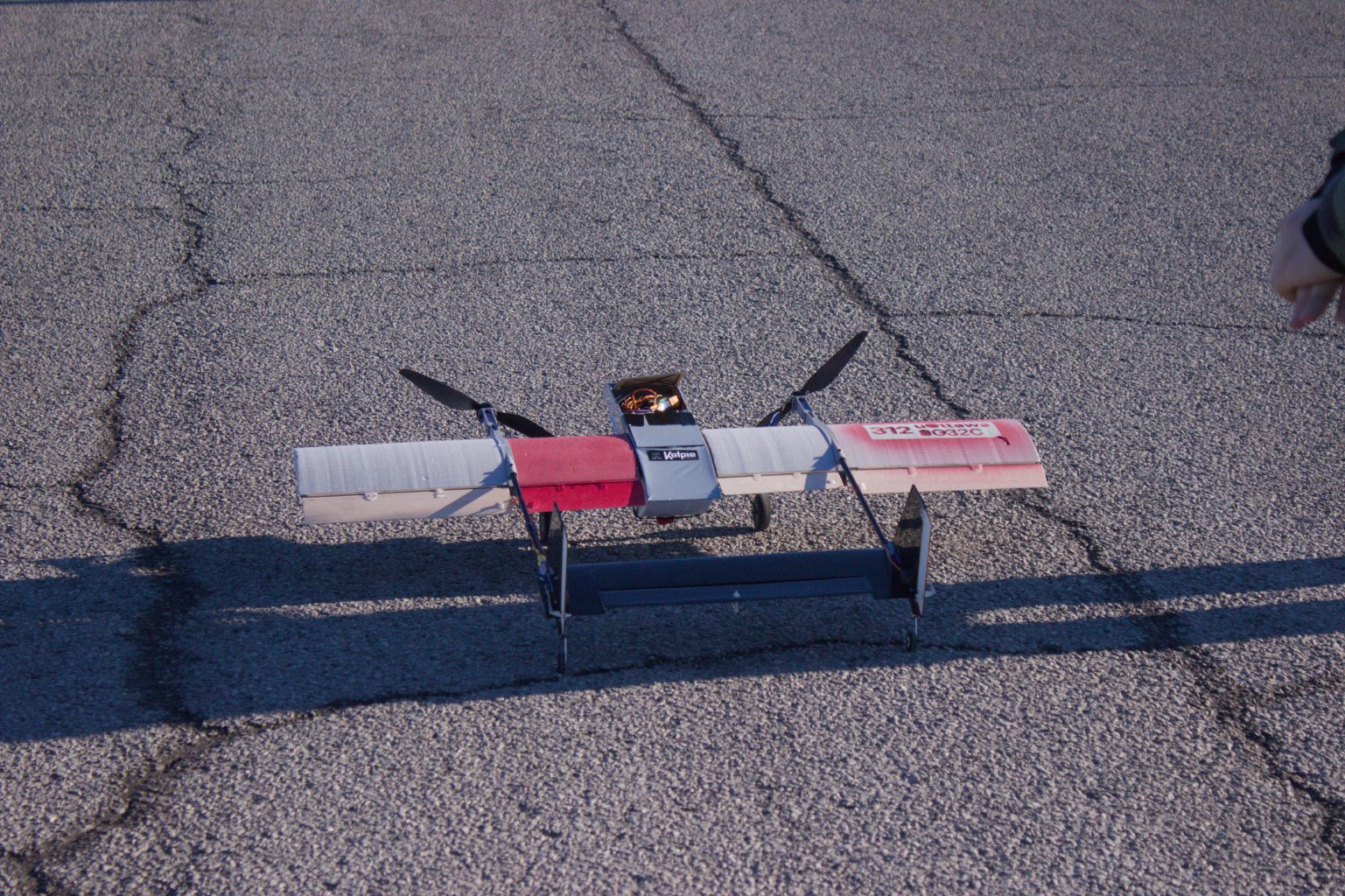
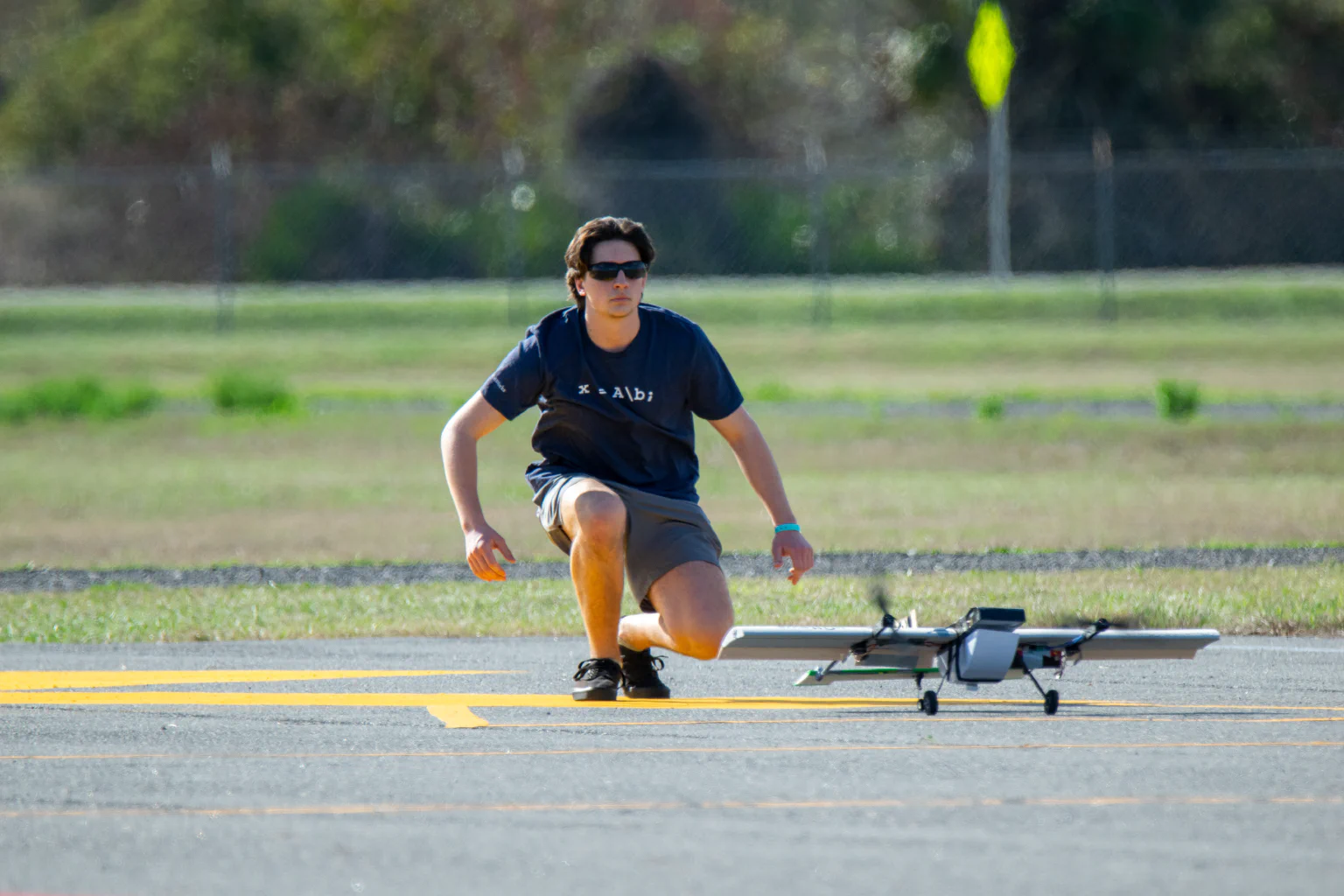 Kaden on the runway with SG32C
Project Gallery